Friday, 12 September 2014

ha·ris·sa

Harissa can dress up many a dish :
  • Serve on top of a plain piece of griddled meat to turn it into something much more exciting.
  • Stir into yoghurt and use as a dip.
  • Include in a sandwich of left over roast meat to fool you into thinking it is not really left overs.
  • Use to marinate meat or vegetables before barbecuing to give an extra exciting edge.
  • Stir into yoghurt with some cornflour and use to coat chicken to make an easy Moroccan style chicken tikka.
  • Flavour a simple vinaigrette with a spoonful to make a great salad dressing.
  • Include as a relish in a mezze spread.
  • Dollop on top of a roast vegetable couscous to give another dimension.
Harissa is a Moroccan condiment which is usually really spicy. But you can make it yourself as hot as you like :

Green Harissa

1 tablespoon salt
2 tablespoons coriander seed
2 tablespoons cumin seed
6-8 green chillies (up to you!)
2 cloves garlic
1/2 cup extra virgin olive oil
1 cup coriander leaves

Toast the coriander and cumin seeds until fragrant. Puree all the ingredients together until smooth.

chick·en bar·be·rry·a·ni

This month Owen decided that Paper Chef should involve Barberries, Pumpkin, Spinach and Slow. I was rather pleased with the line up ; I had suggested barberries as a Paper Chef ingredient a wee while ago when I was seduced into buying a packet by the salesman's description of the tart red berries. Sadly, they had sat in my cupboard, unopened, until now. I had some pumpkin in the fridge and the silverbeet (my substitution for spinach) was looking perfect out in the garden, begging to be used for dinner. And slow . . . the perfect way to make a Monday night dinner!
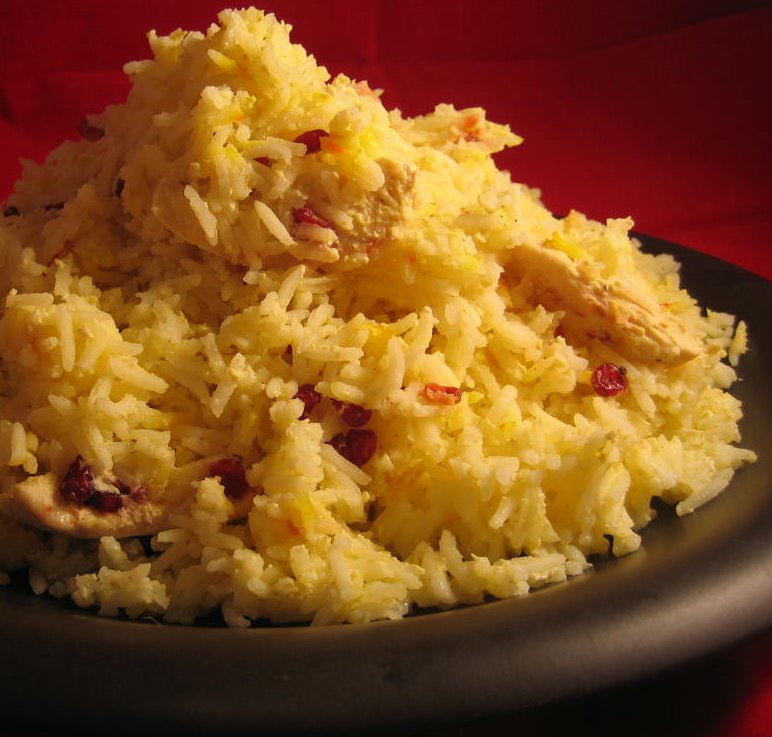
When I first bought the barberries I found a recipe in Claudia Roden's The New Book of Middle Eastern Food for rice with chicken and barberries. The recipe describes it as the most famous and traditional of Iranian recipes, turning out like a pie with a crisp brown crust. To tell the truth this is what I set out to make this evening, but it is not what I finished with. As I was preparing the recipe I kept thinking this was rather like a biryani, so I decided to turn it into that instead, rather cunningly named as barberryani, do you not think!?
So that is the barberries, and, being slowly cooked at a low temperature with some of my homemade yoghurt, the Slow taken care of.
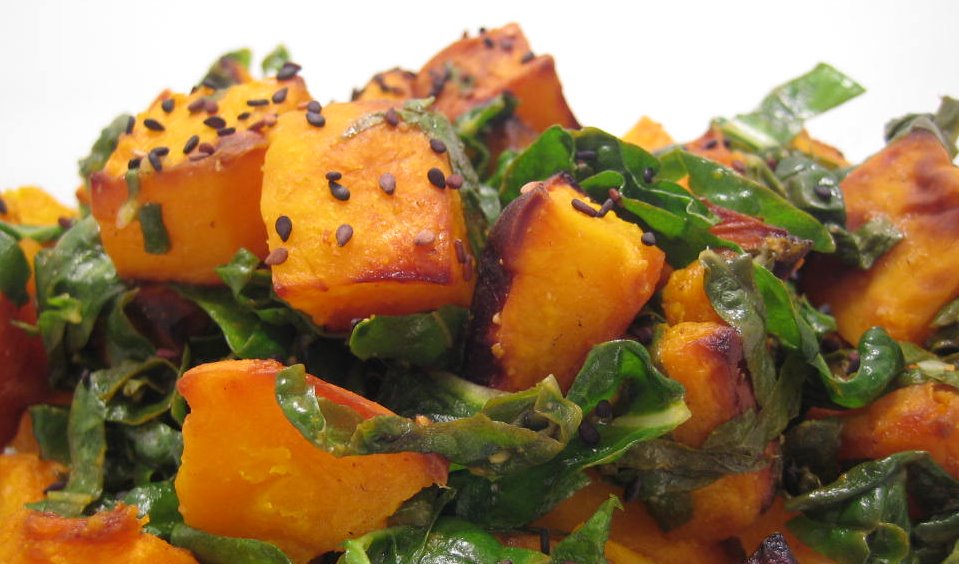
The pumpkin and silverbeet I turned into a warm salad, going rather well with the barberryani, both in terms of colour and flavour and Paper Chef.

Chicken Barberryani
serves 4

1 chicken breast
olive oil
1 cup of basmati rice, rinsed
3/4 cup yoghurt
1 small egg
a good pinch of saffron, soaked in boiling water
3 tablespoons of barberries

Sauté the chicken breast in a little olive oil, sprinkled with salt and pepper, until golden and almost cooked. Cut up into large bit-sized pieces.
Cook the rice in boiling water until almost, but not quite, cooked. A grain squished between your thumb and forefinger should have a chalky inside. Drain.
Beat together the yoghurt, egg, saffron and its water, and salt and pepper.
Mix the chicken into the yoghurt mixture to coat, then remove the chicken to a plate.
Mix the rice with the yoghurt mixture.
Heat a heavy bottomed pot with a lid over a low heat with a coating of olive oil. Tip the rice and yoghurt mixture into the pot and push the rice up the sides to make a shell. Sprinkle half the barberries over the bottom layer of rice-yoghurt then add the chicken pieces then the rest of the barberries. Cover with the rice from the sides and push down gently to even the mixture. Cover and cook slowly on a low heat for about an hour or until the top feels nice and hot. Turn out onto a plate or into a shallow bowl to serve.

Warm Pumpkin and Silverbeet Salad
serves 4 with the Barberryani

1/4 of a large pumpkin, peeled, seeded and cubed
olive oil
salt and pepper
3 large leaves of silverbeet (or a couple of handfuls of spinach), shredded
1 clove of garlic, minced
1 lemon, juiced
Black or normal sesame seeds

Preheat the oven to 180°C.
Toss the pumpkin with some olive oil and salt and pepper. Roast on a baking sheet for 30 minutes or until soft and caramelising. Meanwhile toss the shredded silverbeet with the garlic, lemon juice and salt and pepper in a large bowl. Tip the hot cooked pumpkin onto the silverbeet and toss to combine. Cover with a plate and leave aside until the silverbeet has wilted and the pumpkin is warm. Taste and add more oil, lemon, or salt and pepper before serving sprinkled with sesame seeds.

DMBLGIT : the win·ners!

There were so many wonderful photos entered in the October round of Does My Blog Look Good In This! The standard of photography was incredibly high ; we all enjoyed the task of judging. We decided on 3 categories : Aesthetics, Originality and Edibility as well as an Overall Winner.

Without further ado the winners of DMBLGIT October 2006 are :

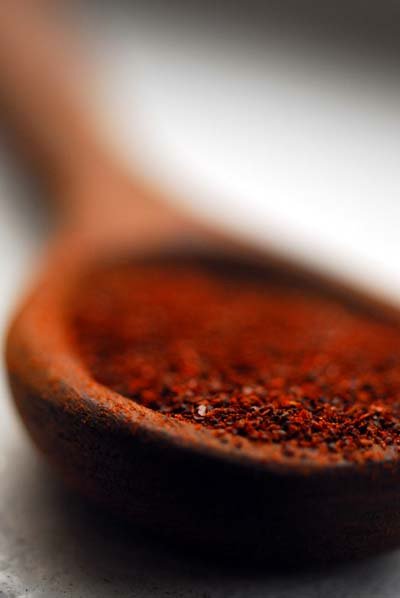
AestheticsChile Powder by Lisa of Homesick Texan using a Nikon D200 with a 55mm macro lens.

Originality
Pomegranate and peach sorbets in mini meringue baskets by Anita of Dessert First using a Canon IXUS 55.

Edibility
Caramel Apple Cake by Peabody of Culinary Concoctions by Peabody using a Nikon Coolpix 4600.

Overall winner
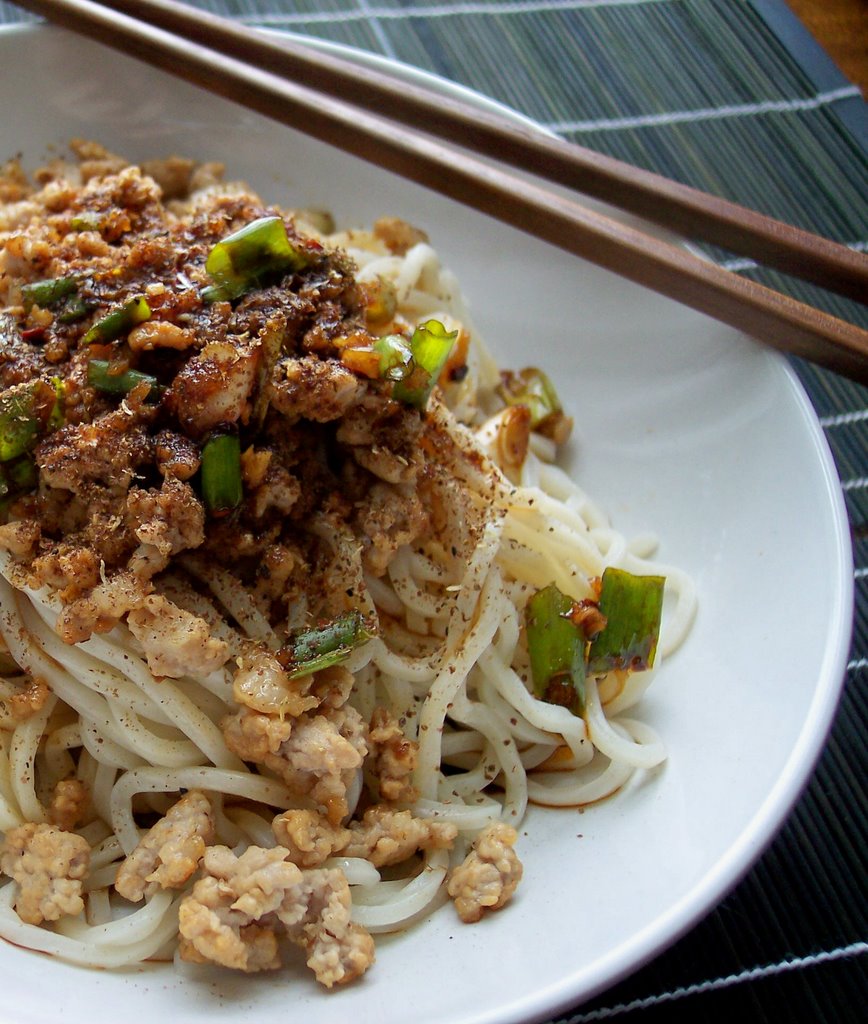
Dan Dan Noodles by Jenny of The Omnivorous Egg using a Kodak DX4530.

Thank you to everyone who entered, the judges, Bron, Bea and Mike, and Matt who has once again supplied the logo trophies for the winners to proudly show on their blogs!

Congratulations Jenny, Lisa, Anita and Peabody, please collect your trophies :


ku·ma·ra and chick·pea frit·ters

Last night we had baked kumara with steak and an awesome brussel sprout and cavalo nero dish as recommended specified by our fried Rachel.  However since I had decided to bake all the kumara in our possession so we could have them later there were 3 left.  I knew this wouldn't be a problem!  So tonight, with nothing much else left in the fridge we conjured up some fritters!  Hooray!  Past pie, nothing is better than a fritter.

Kumara and chickpea fritters
serves 3

Left over baked kumara, perhaps 3
1/4 cup grated parmesan
1 tablespoon flour
1/4 cup finely chopped parsley
1 400g can drained chickpeas
sal and pepper
oli

po·ta·to leek and ri·cot·ta pas·ty

pas·ty not past·y

I try to plan our week's meals. I also try to stick to the plan. Most of the time I do because it does make things easier, but sometimes the planned meal is exactly what we don't feel like eating. Last night was a case in point. I had thought that a nice Sunday night meal would be a salad followed by a pudding - a proper pudding with custard, you know. But come mid Sunday afternoon as the weather was getting cold all we wanted was something comforting, perhaps with pastry. Definitely with pastry.

We have got quite good lately at whipping up pies when we should have been having something more like a salad. But the beauty of things like this pasty is that the filling can be improvised with what you have on hand and pastry can always be made when you need it - of course there is flour and butter in the house!
Potato, Leek and Ricotta Pasty
Serves 4

Pastry
100g unsalted butter, cold
200g plain flour
A good pinch of salt
Ice cold water

Filling
500g potatoes, any type, peeled and cut into bite size chunks
3 large leeks
1 Tablespoon unsalted butter
Olive oil
150g cheese, any type, but cheddar is good, grated
250g Perfect Italiano Original Ricotta
Nutmeg, freshly grated
Salt and pepper

To Finish
A beaten egg

First make your pastry by sifting the flour and salt into a bowl, grating the butter into the bowl and mixing it into the flour then adding enough ice cold water to make a dough. Wrap the dough and put into the fridge to rest while you make the filling.

Put the potatoes into cold water with a dash of salt, bring to the boil and cook until well done. Drain (saving the water for making bread) and leave to cool in a big bowl.

While the potatoes are cooking trim the leeks and slice into fairly thin rings and wash well. Melt the butter and a dash of olive oil in a heavy pan with a lid then add the leeks and cook over a medium low heat until very soft and starting to colour. Add to the bowl of potatoes.

Preheat your oven to 190°C.

Mix the grated cheese, Perfect Italiano Original Ricotta, nutmeg, and generous salt and pepper into the potato and leek.

Roll the pastry out to a large rectangle and heap the filling down the middle long ways. brush the edges with a wee bit of water then bring the edges to the top along the filling and press well the seal then fold over and crimp prettily. Place on a metal baking sheet lined with baking paper and brush with the beaten egg. Place in preheated oven and bake for 40 minutes or until looking lovely and golden.

Cut into slices to serve. Enjoy!
And if you did still want that salad you can always have it along side . . .

Tuesday, 24 December 2013

lorne sau·sage

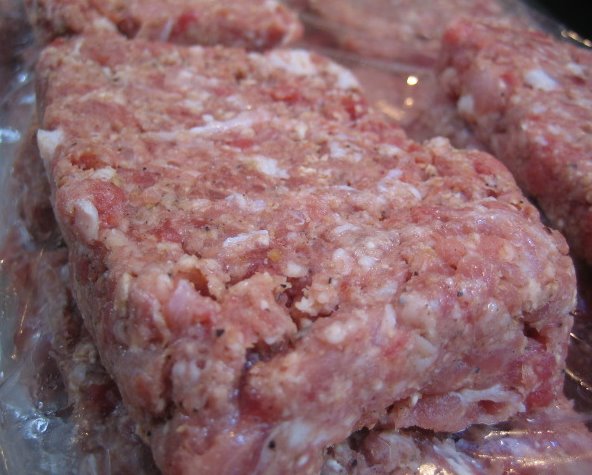
Roll on sausage has been our Christmas morning tradition for many years now. Eaten while we all open our stockings, it is the best kind of breakfast to nibble on while your hands are busy pulling off paper and sipping Champagne. The only changes we are going to make this year is to eat the roll on sausage with wheat beer as well as Champagne, but more importantly perhaps, we have made the lorne sausage ourselves.

Lorne sausage is a Scottish speciality. Instead of the sausage mixture being encased in sausage skins like sausage links, lorne sausage is a square, sliced sausage that fits perfectly in a morning roll or between two slices of bread. The sausage meat is made and then packed into a cling-film lined loaf tin and chilled in the freezer until it is set, but not frozen, then unmolded and sliced. The mixture itself is fairly spicy ; spicy with pepper, nutmeg and a bit of ground coriander. I always think it slightly strange that a traditional Scottish food should be spicy, but like a good peppery haggis, lorne sausage is indeed fairly spicy. HP sauce is the perfect accompaniment with the sweetness of the sauce going so well with the spiciness of the lorne sausage.

G is Scottish, and we really like this tradition that brings some his heritage to this, the other, side of the world at Christmas.

Lorne Sausage
makes 14 good slices

2kg of meat, half pork and half beef, with 20% fat, either from fatty pork belly or pork back fat, minced
1 1/2 cups fine bread crumbs, I used matzo meal
1 cup oatmeal
1 t ground white pepper
1 t ground black pepper
2 t freshly grated nutmeg
3 t ground coriander
3 t salt
1 cup of water

Mix everything together thoroughly. Fry a little of the mixture to check the seasoning.
Pack firmly into a plastic lined loaf tin, and chill in the freezer until it is set, but not frozen, about 45 minutes.
Carefully remove from the loaf tin and slice into 1-1.5cm slices.
If you want to freeze for later, perhaps Christmas morning, lay the slices on a plastic lines baking tray and freeze, bagging up once frozen.
To cook the lorne sausage, allow to thaw if frozen, then fry in a little oil or BBQ!
Serve in a soft roll for roll on sausage or between two slices of soft white bread for piece with sausage! Adding some HP sauce to complement the spiciness of the lorne sausage for a perfect breakfast.

Check Morsels and Musings for other Festive Food Fair fare.

Sunday, 31 July 2011

roast pork

Crackling crackling and I am the only one except Nico the dog who will eat it!  Luck!

We received a share in a pig on Friday and I have been looking forward roasting my part of the leg since it arrived!  We ordered the pork from www.longbushpork.co.nz which is local and rather well looked after.  I also asked the butcher for the fat to render (glorious lard coming up!), the snout for Nico the dog and all the other parts I could imagine!  Hams, sausages and gammon are arriving next week . . . I can't wait for the black bean soup made from the gammon-cooked-in-coca-cola-stock!

My piece of leg to roast weighed in at 2.1kg so I used the H-F-W formula of 20 minutes sizzle, plus 25 minutes per 500g and a half hour rest to calculate this schedule for our Sunday Roast :
The day before make rub by mashing together olive oil, bay leaves, garlic and salt and pepper and apply to pork and leave uncovered in fridge to ensure nice dry skin, leading to crackly crackling.
8am take pork out of fridge to come to room temperature
8.30am turn oven on to preheat to 220°C
9.25am put pork in oven
9.45am turn oven down to 160°C and cook pork for 1 3/4 hours. Peel and cut potatoes into egg size chunks, par boil for 8 minutes in salted water, drain and shake in pan to fluff then put on a plate to cool.  Peel parsnips  and cut into large chunks, toss in an oven dish with olive oil, maple syrup, salt and pepper then dot with butter.  Peel Brussels sprouts and put in steamer pan with some water. Peel and slice apples and put in a pan with a splash of water on a medium heat to turn into sauce.
10.45am Put a pan with some of the pork fat from the joint into heat for the potatoes.
11am put potatoes and parsnips in oven, stir and fluff apples.
11.30am take pork out to rest on a plate, remove crackling to a baking sheet and cover meat with a metal bowl.  Turn oven up to 200°C.  Turn over potatoes and stir parsnips.  Drain fat from roasting pan and make gravy by deglazing with some kind of alcohol and adding water and seasoning to suit.
11.45am Turn water on under Brussels sprouts, and put crackling in oven to reheat.
12noon have lunch!